Patios, terraces, and pool decks
Paver patios in Calabasas.
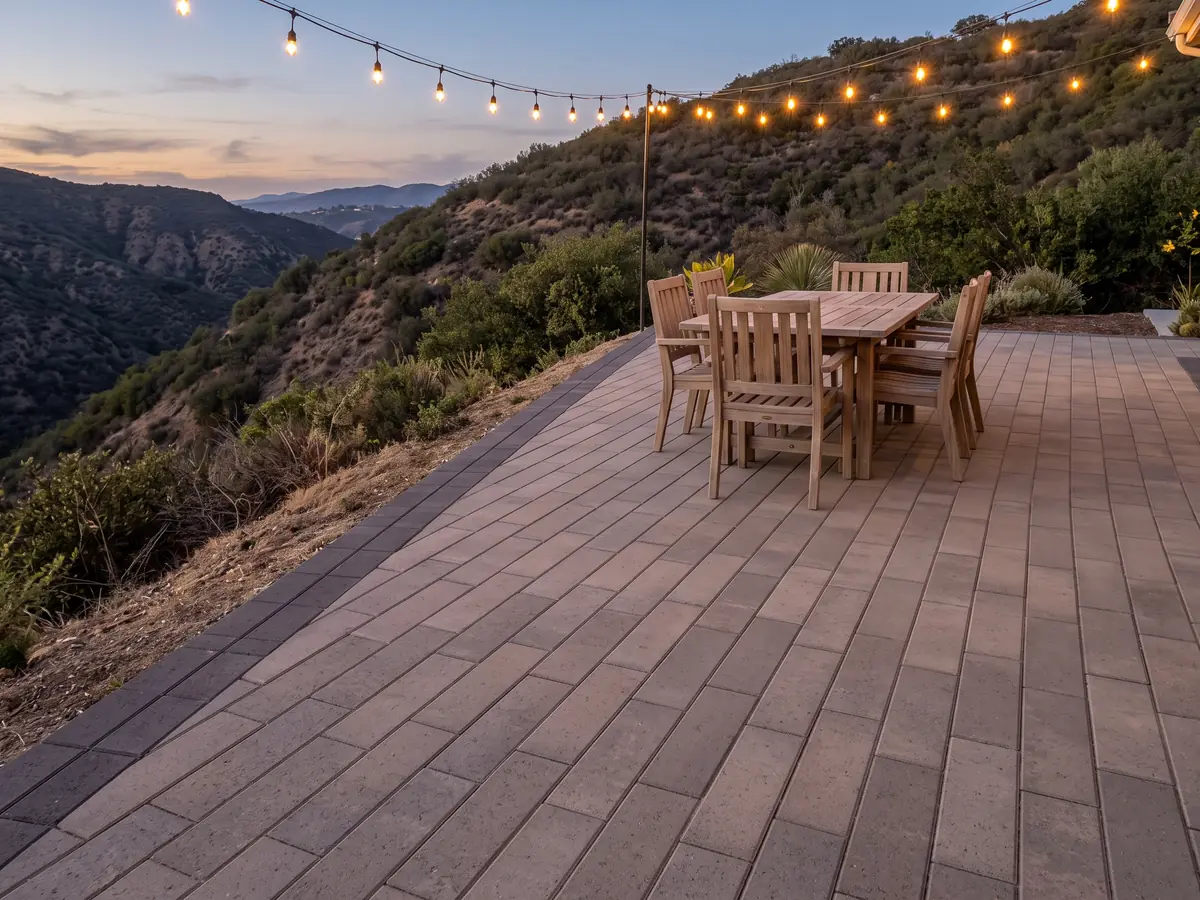
Most outdoor living here happens on a pad carved into a slope, with a canyon on one side and dry chaparral on the other. That setting decides the edge detail, the drainage, and the stone. It should also decide the design.
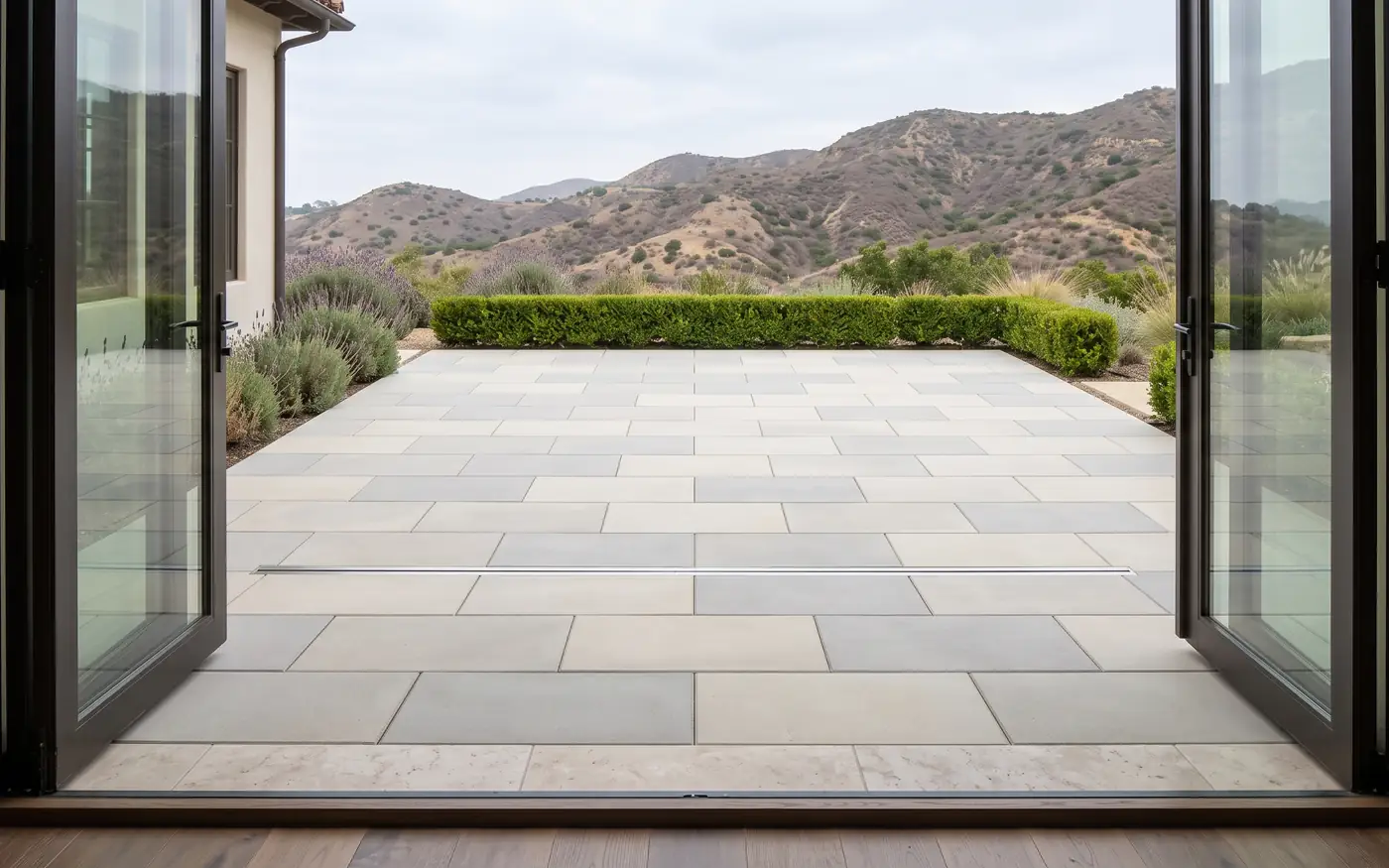
The edge is the whole problem
On a level valley lot, the perimeter of a patio is a finishing decision. On a Calabasas hillside pad, it is a structural one. The rear of many properties here ends where the graded pad ends and the slope begins, and that transition is where terraces fail. An unrestrained paver edge above a bank loses its outermost course over a few wet seasons. Water that leaves the surface at that edge finds the softest line down the slope and starts cutting.
So the outer edge gets an anchored restraint, not a surface-pinned strip, and in many cases a concrete haunch set below finished grade. The last two or three courses are laid as a soldier or double soldier band, which gives the perimeter a heavier unit and a cleaner visual line at the same time. Where the terrace sits close to the top of a bank, the fall is reversed so that water runs back toward the house side of the pad and into a drain, rather than being allowed to sheet over the drop. That is counterintuitive and it is correct.
Base and ground on a graded pad
Many pads in the Santa Monica Mountains were cut on one side and filled on the other. A single terrace can therefore sit on two different subgrades. The contractor checks for that before setting depth, because a base built to one number across both will settle unevenly at the join. Fill side goes deeper, and a geotextile separation layer keeps the aggregate from working down into softer material over time.
Soil surveys map most hillsides here as clay loam, which swells when wet and shrinks as it dries. That is an argument for a well-drained aggregate section rather than a thin bedding on native ground. It is also an argument against laying pavers directly on soil, which is a question people ask often and which never ends well on this terrain. The patterns and types guide covers how the field itself is set out.
Pool decks in dry hillside sun
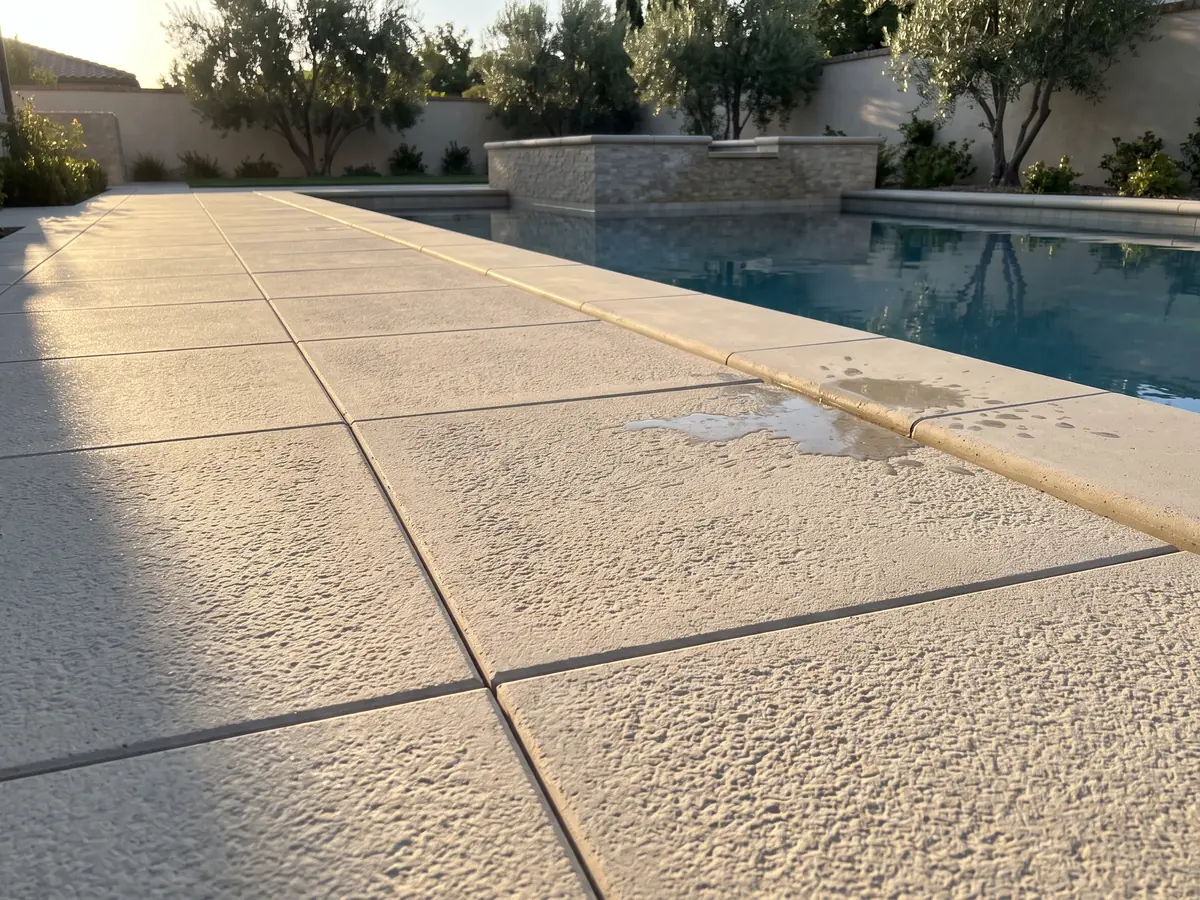
Calabasas summers are hot and dry, and an open hillside pad gets strong afternoon sun. That makes color the first practical decision around water. A light body reflects more heat and stays noticeably cooler underfoot than a dark one, which matters on a deck people cross barefoot in August. Density plays a part too, and porcelain and large-format lines with a textured face run cooler while keeping grip when wet.
Coping and the transition at the water are where a pool deck is judged. A bullnose or drop-face coping unit finishes the edge properly, and the deck falls away from the pool so splash-out and rain both leave the surface rather than tracking back in. Where a spa or raised bond beam sits above the deck, the paver pattern is set out from that feature rather than from a wall, so the cuts land where they are least visible. The pattern is set out from the feature rather than the wall, as it should be across paver work in Calabasas.
Wildfire, wind, and dust
On CAL FIRE's 2025 map, Calabasas homes fall in the Very High Fire Hazard Severity Zone class. Fire moves faster uphill, so the side of the house above a slope needs the most attention. Stone and concrete cannot catch, so a broad terrace where the house sits above a slope pulls real weight inside the defensible space around the building, replacing combustible ground cover with a surface that cannot carry flame. It sits alongside the brush clearance the county enforces, not instead of it.
Wind carries dust off dry hillsides onto any open surface. Polymeric joint sand keeps the joints locked so windblown material does not settle in and seed them, and a paver with variegation in the face carries a light dust film far better than a flat pale tone. A terrace here should look right on the day it is washed and on the fourth week after.
Design, pattern, and what the committee sees
Many Calabasas homes are Mediterranean or contemporary in style, and both read better with a restrained field and a considered border than with a busy pattern across the whole area. Running bond and stack bond suit large-format stone. Herringbone belongs on drives and heavier-traffic areas. A single banded border in a second tone gives the terrace a defined shape without introducing a second pattern.
In a gated tract the HOA architectural committee will want to see the paver line, the color range, the layout drawn to scale, and often the drainage approach before anything is ordered. Committees review on their own schedule, and a submission that is short a detail goes back for another round. The contractor prepares the package in the format they expect. Where the work changes grade or adds retaining, City of Calabasas review applies as well, under the grading provisions of Title 15 and the hillside site standards in Section 17.20.150. Calabasas runs its own building and planning department, so none of this goes through LADBS.
Sizes that work here
| Terrace | Area | Typical installed |
|---|---|---|
| 10 x 10 seating corner | 100 sq ft | $1,500 - $2,200 |
| 16 x 20 dining terrace | 320 sq ft | $4,800 - $7,040 |
| 20 x 20 main patio | 400 sq ft | $6,000 - $8,800 |
| Wrap terrace | 800 sq ft | $12,000 - $17,600 |
| Pool deck surround | 900 sq ft | $16,200 - $22,500 |
Ranges cover the paver surface and its base. Retaining, engineered fill, structural steps, and new drainage runs are quoted as separate scope. Full detail sits in the Calabasas cost guide.
A motor court adds turning load to the build. More on Calabasas driveway and motor court work.
The gallery shows the terrace and pool deck finishes available, if you want a look before the numbers.
See the terrace before it exists.
Send a photo and rough dimensions. The contractor returns a 3D rendering in your chosen paver and a fixed written quote. The work is done by a licensed contractor. Ask for the workmanship warranty in writing.
Request a 3D renderingAsked about terraces
What is the average cost of a 10x10 paver patio in Calabasas?
Ten by ten is 100 square feet, which comes to between $1,500 and $2,200 once installed. Tiny areas cost more per square foot, since getting a crew, a saw, and a compactor to the site costs the same for 100 square feet as for 1,000.
How much does a 20x20 paver patio cost in Calabasas?
At 400 square feet, plan on about $6,000 to $8,800 installed. On a pad that sits above a graded slope, expect the upper part of that range. The outer edge needs a restraint detail that resists the drop, and the fall has to be set so water leaves the terrace toward a drain instead of over the bank.
Can a patio be built out over a hillside slope?
Extending usable terrace past the existing pad edge means retaining, engineered fill, or both, and that is structural work rather than paving. It falls under City of Calabasas grading review, and on most gated properties under HOA review too. The contractor sizes it honestly at the first visit so the budget reflects the real scope.
Do pavers get too hot around a Calabasas pool?
Surface temperature follows color and density more than material. A lighter body reflects more of the direct hillside sun and stays noticeably cooler underfoot than a dark one. Porcelain and large-format lines with a textured face also run cooler and keep grip when wet, which is why they get specified around water here.
Are paver patios a good idea in a very high fire hazard zone?
They help. Concrete and stone pavers do not burn, so a wide terrace on the side of the house above a slope replaces combustible ground cover with a noncombustible surface and supports the defensible space around the structure. It is one part of a fire-safe property, alongside the brush clearance the county requires.