Pricing guide
What moves paver prices in Calabasas, CA.
No price list here. The contractor prices each job in writing after walking it, and on a hillside lot three things move that number most: the grading, the gate, and the approvals.
- The grading
- The gate
- The approvals
What each project adds
| Project | What pushes the price up | What keeps it down |
|---|---|---|
| Walkway | Steps, curves, and material carried a long way by hand | A straight run on a level pad the truck can reach |
| Patio | An edge above a slope that needs an anchored restraint | A terrace on an established pad beside the house |
| Concrete pavers | Tumbled or large-format lines and a border in a second tone | A standard unit in a simple bond |
| Pool deck | Coping, deck drains, and a textured face for wet grip | A square deck with few cuts around the water |
| Driveway or motor court | A vehicle-rated base and a banded or radial center | A plain field on a pad that is already compacted |
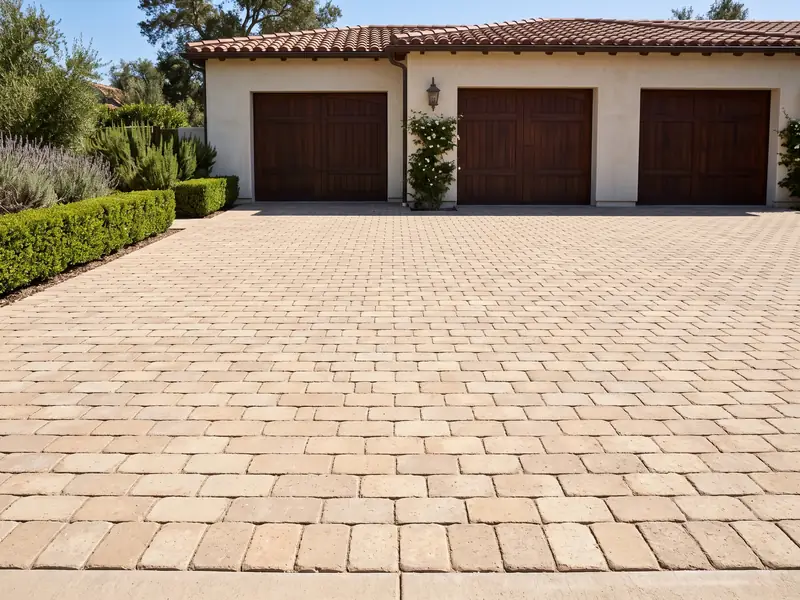
Estate work in Calabasas often covers more than one surface. A circular drive with a motor court and a porte-cochere apron is a large area before the walkways are counted. Size spreads fixed costs such as mobilization and staging across more ground, so the rate per foot tends to ease on a big job. The written quote is exact to your property, your paver line, and your pattern.
Measure the whole run, not one corner.
A circular drive with a motor court covers more ground than it seems to from the house. The contractor measures the full run and itemizes every line of it.
Request a 3D renderingWhat moves the number here
- Area. Size sets the material order and the labor, but not in a straight line. Setup, delivery, and gate clearance cost about the same for a small terrace as for a large one, so small jobs cost more per foot.
- Slope and pad condition. Many Calabasas lots sit on a graded pad cut into the Santa Monica Mountains. If the surface follows the existing pad, base work is straightforward. If it climbs a bank, crosses a cut and fill line, or needs a retaining detail, that is engineered work with its own cost.
- Drainage. Water on a hillside has somewhere to go, and the surface decides where. Area drains, a solid outlet, and a permeable joint choice all carry cost, and all of them are cheaper than repairing an eroded slope later.
- Gated access. Many Calabasas communities have guarded or coded gates, and each sets its own contractor access rules. Crew and vehicle lists have to be cleared ahead, and delivery windows are often fixed. That is scheduling work, and it is built into the quote rather than discovered on day one.
- Driveway length and staging. Long private drives are common, and a truck cannot always reach the work face. Material may be dropped at the motor court and moved in stages. Distance costs labor.
- Removing what is there. Older stamped concrete and asphalt has to come out and be hauled off. On a narrow canyon street, haul-off is slower than on a valley floor lot.
- Pattern and cutting. Herringbone laid on the diagonal, banded borders, and a radial motor court center all add cuts. Cuts add labor.
- Paver line. Standard concrete pavers cost the least. Tumbled, large-format, and porcelain lines cost more. On a Mediterranean elevation the stone choice is usually the design decision, not the budget decision.
- Permits. Paving that changes an existing drainage pattern can need a City of Calabasas grading permit, and the permit and any engineering behind it go on the quote.
Slope is the largest single variable
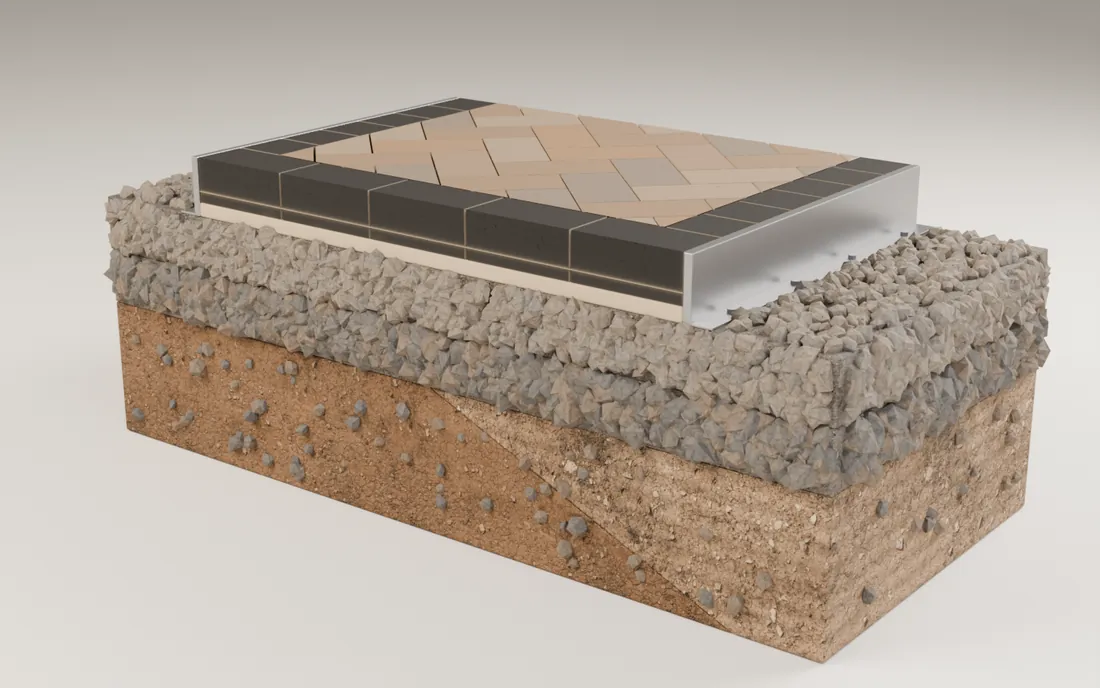
What sits under a paver matters more than the paver, and under a Calabasas home that is usually engineered fill, not native ground.
Pads here were cut into the hillside and filled to level, which means the compaction under one end of a driveway can differ from the other. Base depth is set accordingly. A patio on an established pad may need six inches of compacted aggregate. A driveway crossing a cut and fill transition may need considerably more, and what goes in under it depends on how soft the ground turns out to be.
This is also why the fall is surveyed before quoting. Slope drainage is not a finishing touch on a hillside lot, it is the design. Water that sheets off a 2,000 square foot motor court has to be collected and taken somewhere deliberate, not allowed to run over a chaparral bank where it will cut a channel in the first serious rain. Where the site allows it, a permeable joint system lets a share of the water go down instead of across, which reduces the volume the drains have to carry.
Approvals run through the City of Calabasas
Calabasas is its own incorporated city. Grading permits in Calabasas go through the Public Works Department and the city engineer, not LADBS. The grading provisions sit in Title 15 of the municipal code, and hillside and ridgeline site standards sit in Section 17.20.150. The city also has an Architectural Review Panel that advises the Planning Commission and City Council on hillside projects, including how they look from the street.
Inside a gated tract there is a second gate before the physical one. The HOA architectural committee reviews the paver, the color, the pattern, and the layout, and in the stricter communities it reviews the drainage plan too. Committees review on their own schedule, so a complete package matters. Geotechnical input, city review, and an HOA committee cycle can each add time before work starts, so it pays to start them together. None of that changes the per square foot price of the surface. It changes when the work starts, which is why the schedule belongs in the conversation from the first visit.
Fire rating, dust, and which paver
Nearly all of Calabasas is mapped as a Very High Fire Hazard Severity Zone. Dry chaparral, steep canyon slopes, and Santa Ana wind events are the operating conditions, not the exception. Concrete and stone will not burn, so a generous paved apron earns its keep inside the defensible space around the structure, particularly on the side of the house above a slope, since fire moves faster uphill.
The same climate argues for practical choices at the surface. Open hillside pads get strong afternoon sun, so a lighter color body stays cooler underfoot around a pool deck. Dust settles on any surface near dry hillsides, so a mid-tone paver with some variegation in the face hides between-cleaning reality far better than a flat pale gray. Polymeric joint sand keeps the joints locked and keeps windblown dust from turning them into a seedbed.
Pavers against concrete on a hillside lot
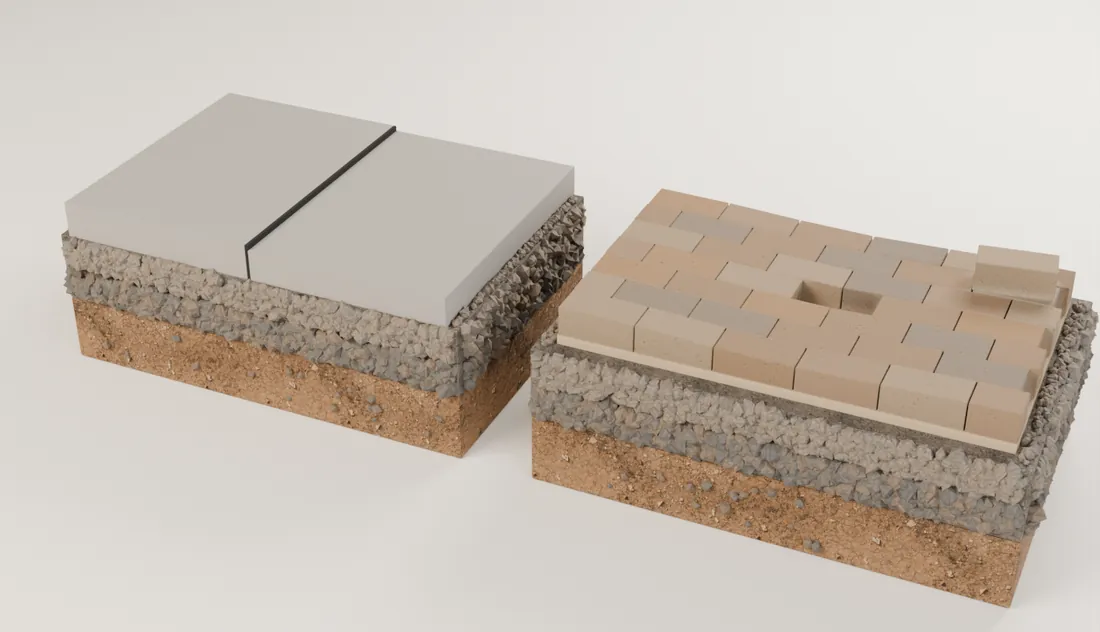
A plain poured concrete slab is the cheaper surface on day one. What it does not do is move.
Ground under a filled hillside pad settles unevenly, and a slab answers that with a crack that runs across the whole surface and cannot be repaired invisibly. An interlocking paver field answers it by flexing at the joints. If a low point does appear, that section is lifted, the base is corrected, and the same pavers go back down. There is no patch, no color mismatch, and no saw line across the entrance to the house.
For a property where the driveway is the first thing anyone sees, that repairability is the argument. Full detail is in the guide to paver lifespan and upkeep.
The wider picture, including slope work and gated access, sits with hillside paver work in Calabasas.
See your number, and see the design.
The contractor walks the property, measures the real scope, and returns a 3D rendering with a fixed written quote. It costs nothing, and booking needs no card.
Request a 3D renderingAsked about estate pricing
How much do pavers cost per square foot in Calabasas?
There is no fair per foot figure to publish for Calabasas, so this site does not print one. Walkways and level patios on an existing pad are the simpler end of the work. Driveways, motor courts, and pool decks on graded hillside sites cost more, because the base is deeper and the drainage detail is more involved. The contractor prices your job in writing after seeing it.
How much does a 20x20 paver patio cost in Calabasas?
Where it sits matters more than its size. On a level pad next to the house it is simple work. On a hillside pad where the patio sits above a slope, the edge wants a proper restraint and a way for water to leave the pad without spilling over the bank, and that adds to the price. The contractor measures it and prices it in writing.
How much is 1000 square feet of pavers in Calabasas?
It depends on the surface. A driveway or motor court costs more than a patio of the same size, since it carries vehicle loads and needs the deeper section. At that size, setup and access are spread over more ground, so the cost per foot tends to come down. The written quote itemizes every line.
Does hillside grading add to the price in Calabasas?
It is usually the single largest variable. Cut and fill on a Santa Monica Mountains pad, slope drainage, and any retaining detail are engineered work, and they are priced separately from the paver surface itself. A flat motor court on an existing compacted pad is far simpler than a driveway that climbs a graded bank.
Do city permits and HOA review affect the cost?
They affect the schedule more than the surface price. Calabasas is its own city, so this does not go through LADBS. Grading permits go through the city's Public Works Department and the city engineer, and hillside sites also fall under the hillside standards in Section 17.20.150. In gated tracts the HOA architectural committee reviews the material, color, and layout first. Allow real calendar time for both before crews mobilize.
Are pavers more expensive than concrete in Calabasas?
Up front, yes. A plain poured slab is the cheaper surface on day one. Pavers cost more to lay and less to live with. On a hillside pad they move with the ground rather than cracking across it, and one unit can be lifted and reset where a settlement point appears, which counts on cut and fill ground.
More detail on driveways and motor courts and terraces and pool decks. Shorter questions on the Calabasas FAQ.
Next: paver driveways and motor courts, paver patios, concrete pavers, or the guides.